Reviewing Colorful Embroidery on Black Fabric Back
As an embroidery designer who has spent years digitizing files for small business owners, I have learned that the difference between a cheap giveaway and a premium brand asset often comes down to contrast and clarity. When I first encountered Colorful Embroidery on Black Fabric Back, my immediate reaction was one of cautious optimism. In the world of commercial embroidery, dark backgrounds are notoriously difficult to master because they demand high-visibility thread choices and precise stitch placement. This review explores how this specific design asset performs when translated from a digital graphic into tangible, branded merchandise.
First Impressions: Visual Impact and Brand Personality
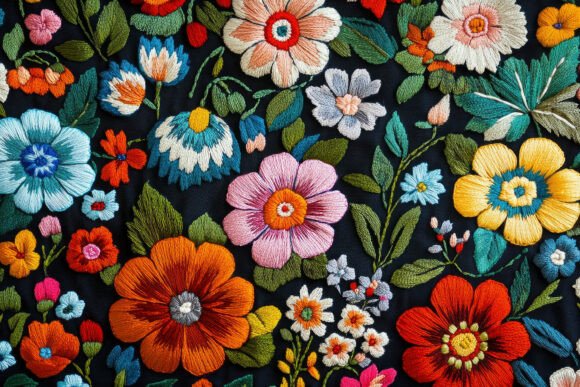
The title itself suggests a bold aesthetic. A colorful design set against a black fabric background inherently creates a high-contrast visual that grabs attention. For boutique owners and handmade brands, this is crucial. It does not feel rustic or subtle; rather, it feels modern, playful, and energetic. The interplay of vibrant thread colors against the deep black base suggests a brand identity that is confident and unafraid to stand out. For Etsy sellers or creative studios looking to elevate their small business merch, this visual personality can signal quality and creativity simultaneously.
However, we must remember that the product description lists this as a JPG file with dimensions of 5824 x 3264 px. This is a critical distinction. As a designer, I cannot directly load a JPG into an embroidery machine. This asset serves as a high-quality reference or a printable mockup source. It allows us to visualize the final finished product before we commit to digitizing the design or selecting threads. The high resolution ensures that when we zoom in to inspect details for our design assets, we do not lose clarity, which is essential for accurate color matching.
Real-World Applications for Small Businesses
Imagine a local coffee shop or a trendy florist wanting to upgrade their staff uniforms. Using the visual inspiration from Colorful Embroidery on Black Fabric Back, we can create embroidered patches that pop against black aprons. The darkness of the fabric makes the colors appear more saturated, giving the impression of a premium, custom look. This is ideal for apron embroidery where durability and visibility are key.
For apparel decorators, this concept works exceptionally well on cap embroidery. A black baseball cap with a colorful, compact logo on the front panel is a timeless seller. The black background hides sweat and wear, while the colorful stitching maintains brand recognition. Similarly, for tote bag manufacturers, a black canvas bag featuring this style of colorful embroidery becomes a statement piece. It transforms a simple tote bag design into a fashion accessory that customers are proud to carry, thereby increasing brand exposure in public spaces.
Handmade product creators can also leverage this aesthetic for product labels. Instead of a printed tag, imagine a small, woven-style embroidered patch sewn onto the hem of a garment or the corner of a blanket. This adds tactile value and reinforces the perception of a high-end handmade product. It tells the customer that care went into every detail, fostering trust and encouraging repeat purchases.
Technical Considerations and Design Challenges
While the visual appeal is strong, executing this look requires technical precision. When working with dark fabrics, the choice of thread is paramount. You must ensure that your thread colors have enough brightness to overcome the black base. Muted or pastel tones may get lost, so opting for vibrant, high-saturation threads is necessary to replicate the effect seen in the reference image.
Another critical factor is stitch density. If the design is too dense, it can cause puckering on lighter fabrics, but on heavy black fabrics like twill or denim, it needs to be substantial enough to provide coverage without becoming stiff. For small patch sizes, such as those used on chest logos or sleeve details, you must simplify the design. Intricate details and tiny lettering often disappear when scaled down. Always test the design at the actual size it will be stitched to ensure legibility.
Fabric texture also plays a role. A smooth polyester blend will show stitches differently than a textured cotton canvas. Before committing to a large run of commercial embroidery, always test on the actual fabric you plan to use. This helps you determine the correct hoop size and stabilizer type. For stretchy fabrics like those used in performance wear, a cut-away stabilizer might be necessary to prevent distortion, whereas a tear-away might suffice for stable woven materials.
Enhancing Brand Identity and Customer Trust
Consistency is the cornerstone of brand identity. By using a consistent visual theme like Colorful Embroidery on Black Fabric Back across various touchpoints—uniforms, packaging, and social media mockups—you create a cohesive brand experience. Customers subconsciously associate this consistency with professionalism and reliability. When a customer receives a package with a beautifully embroidered thank-you note or a branded patch, it elevates the perceived value of the entire purchase.
This approach also aids in customer engagement. Unique, well-executed embroidery stands out in a sea of printed graphics. It invites touch and inspection, creating a deeper connection between the buyer and the brand. For online sellers, using high-quality images of these embroidered items as design assets in their listings can significantly improve click-through rates. The texture and depth of embroidery photograph beautifully, providing a realistic preview that builds confidence in the buyer.
Practical Designer Notes for Implementation
Before you begin production, here are my top recommendations for integrating this style into your workflow:
- Test in Monochrome First: Convert the reference image to black and white to check if the shapes and lines are distinct. If the design relies solely on color for definition, it may fail when stitched.
- Verify Commercial Licensing: Since this is a graphics file, ensure you have the rights to use the image as a basis for your own digitized designs. Do not assume the JPG license covers the final embroidered product.
- Create a Mockup: Use the high-resolution JPG to create a digital mockup on a photo of a black garment. Show this to your client for approval before digitizing. This saves time and manages expectations.
- Check Stitch Count and Format: Remember, you will need to digitize this design or hire a digitizer. Confirm the final digital embroidery file format matches your machine’s requirements (e.g., PES, DST, EXP).
- Inspect Spacing: Ensure there is adequate spacing between elements to prevent thread bridging, especially on curved surfaces like caps.
In conclusion, Colorful Embroidery on Black Fabric Back offers a striking template for businesses looking to make a bold statement. By understanding the technical nuances of stitching on dark fabrics and leveraging the high-contrast aesthetic, small business owners can create merchandise that not only looks professional but also strengthens their brand identity. Whether for staff uniforms, customer gifts, or retail products, this design approach delivers value that goes beyond mere decoration.